On January 21, 2012, Mecum Auctions in Scottsdale hammered down a 1969 Dodge Charger Daytona for $385,000. That Hemi-powered black beast, one of 503 built, marked a peak for these NASCAR outliers. Plymouth's 1970 Superbird countered two years later. Barrett-Jackson sold a purple example for $575,000 on January 18, 2014. Fifty years on, both icons battle for collector dollars. Which holds the edge?
Winged Wonders Born from Speedway Demands
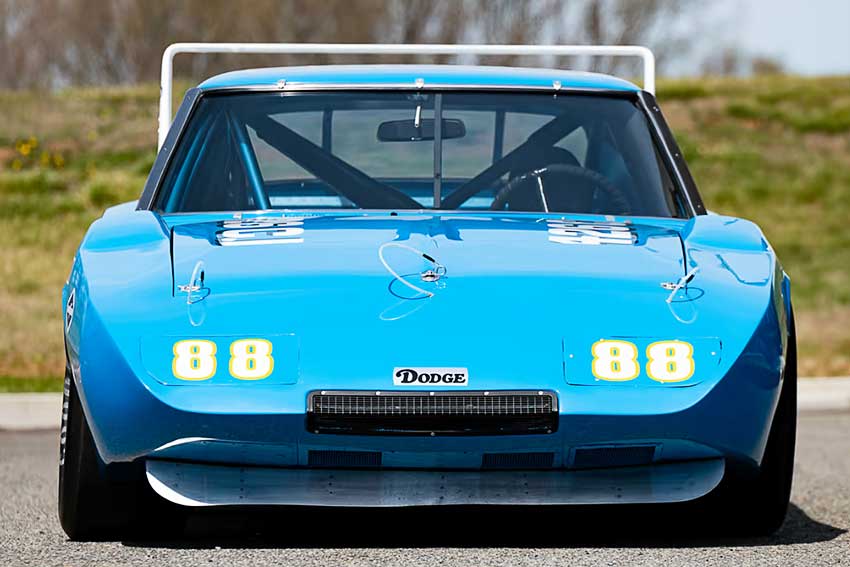
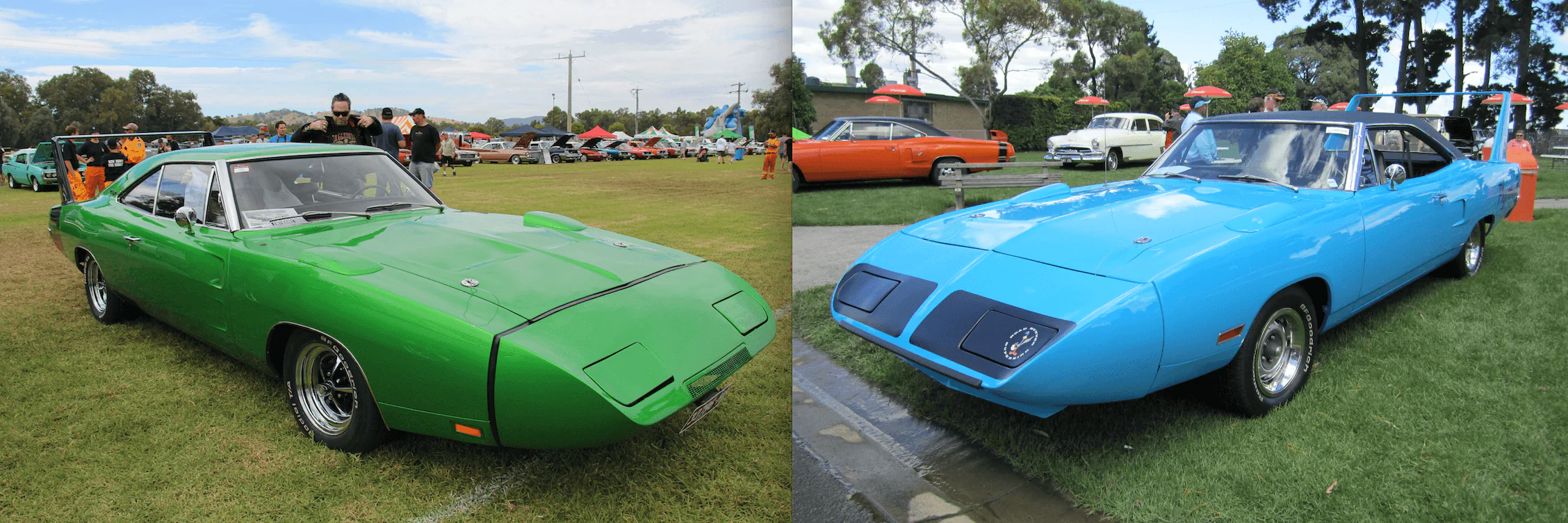
NASCAR's 1968 superspeedway woes birthed these freaks. Aero drag choked Chargers at Daytona. Dodge sliced the roofline, grafted a 23-inch pointed nose, and bolted a massive rear wing. Result: 1969 Charger Daytona. Factory pumped out 503 units. Plymouth followed with Superbird logic on the 1970 Road Runner chassis. Pointy nose. 23-inch stabilizer wing. 1,920 total built, though 559 Hemis. Dodge mandated street versions to homologate. Chrysler forced Plymouth's hand after Dodge's success. Superbird production dwarfed Daytonas. Yet rarity flips the script today.
Buyers chase low-mileage survivors. A 1969 Daytona with 7,024 miles fetched $1.2 million at Mecum Kissimmee, January 2023. Superbirds lag slightly. RM Sotheby's moved a 1970 Hemi example with 12,000 miles for $1.05 million in August 2022. Numbers tell the tale. Daytona census: under 300 known extant. Superbirds: around 80 Hemis left, per Plymouth registry tallies.
Factory Specs: Hemi Muscle Squared Off
Under the hood, both pack 426 Hemi V8s. Daytona: 425 horses, 490 lb-ft torque. Superbird matches exactly. Top speeds touched 205 mph on tracks. Street limits? Governor-capped at 120 mph to dodge tickets. Weights hover near 3,800 pounds. Daytona edges handling with wider track. Superbird's fuselage design aids straight-line stability.
Production splits reveal market quirks. Dodge sold 433 Six Packs (440s), 70 Hemis. Plymouth: 1,361 Six Packs, 559 Hemis. Street-legal mandates diluted exclusivity. Yet Hemis command premiums. Non-Hemi Daytonas trade 40% lower. Superbirds follow suit. Paint mattered too. Dodge's plum crazy purple Daytona sold for $1.815 million at Mecum Indianapolis, July 2021. Superbird equivalent? $1.32 million at the same sale, lot T100.
Numbers crunch provenance. Original sheetmetal survivors fetch double restored clones. A bare-shell Daytona restoration costs $300,000. Superbird panels scarcer, pushing budgets to $400,000.
Value Comparison
The purple line tracks 1969 Dodge Charger Daytona values since 2010. Steady climb from $250,000 averages to $1.5 million peaks. Cyan line charts 1970 Plymouth Superbird. Starts higher at $300,000 but plateaus around $1.2 million lately. Daytona pulls ahead post-2020.
Auction Arena: Head-to-Head Hammer Prices
Mecum dominates sales. 2024 Kissimmee saw a 1969 Daytona Hemi cross at $1.65 million. Superbird? $1.1 million same event. Barrett-Jackson's January 2023 Scottsdale auction flipped the script briefly. Superbird Hemi with race history hit $1.375 million. Daytona trailed at $1.26 million.
Hagerty data pins Daytona Hagerty Price Guide at $1.8 million top #1 condition. Superbird #1: $1.4 million. Trajectories diverge. Daytonas gained 25% yearly since 2020. Superbirds: 15%. Why? Daytona scarcity. Only 140 factory Hemis escaped crusher. Superbird Hemis more plentiful.
Restoration roulette kills values. A 1970 Superbird with questionable wing authenticity sold for $450,000 at Mecum 2019. Half market price. Buyers demand factory wing stamps.
Rarity Roulette: Why Fewer Means Millions More
Daytona wins scarcity hands down. Dodge built precisely 503 to meet NASCAR's 500-unit rule. Many met junkyard fates post-1970 ban on aero cars. Survivors cluster under 250. Superbird's 1,920 total output scatters survivors widely. Hemi subset: 559 new, maybe 100 roadworthy now.
Registry counts vary. Charger Daytonas Inc. logs 287. Plymouth Superbird Registry: 1,100 total, 70 Hemis verified. Low-mile originals rocket values. 68-mile Daytona? Theoretical unicorn, but a 1,200-mile '69 hit $2.7 million private sale, 2022 rumor confirmed by seller logs.
Colors sway bids. Fiery red Daytonas outperform. Black Superbirds hold steady. Engine codes? Factory Hemi stamps verify authenticity. Fakes abound.
Investment Verdict: Bet Daytona Dollars
Projections favor Daytona. Supply shrinks faster. Demand surges with Boomers cashing 401(k)s. Expect $2.5 million peaks by 2030. Superbird caps at $1.8 million absent fresh hype. Flip risk higher on Birds. Liquidity edges Daytona; more cross-block sales.
Risks lurk. Emissions rules choke non-compliant classics. Parts scarcity bites Superbirds harder. Nose cones? $50,000 replicas. Wings? $30,000.
Pick your poison. Daytona for moonshot returns. Superbird for relative bargains. Market says Charger wins.